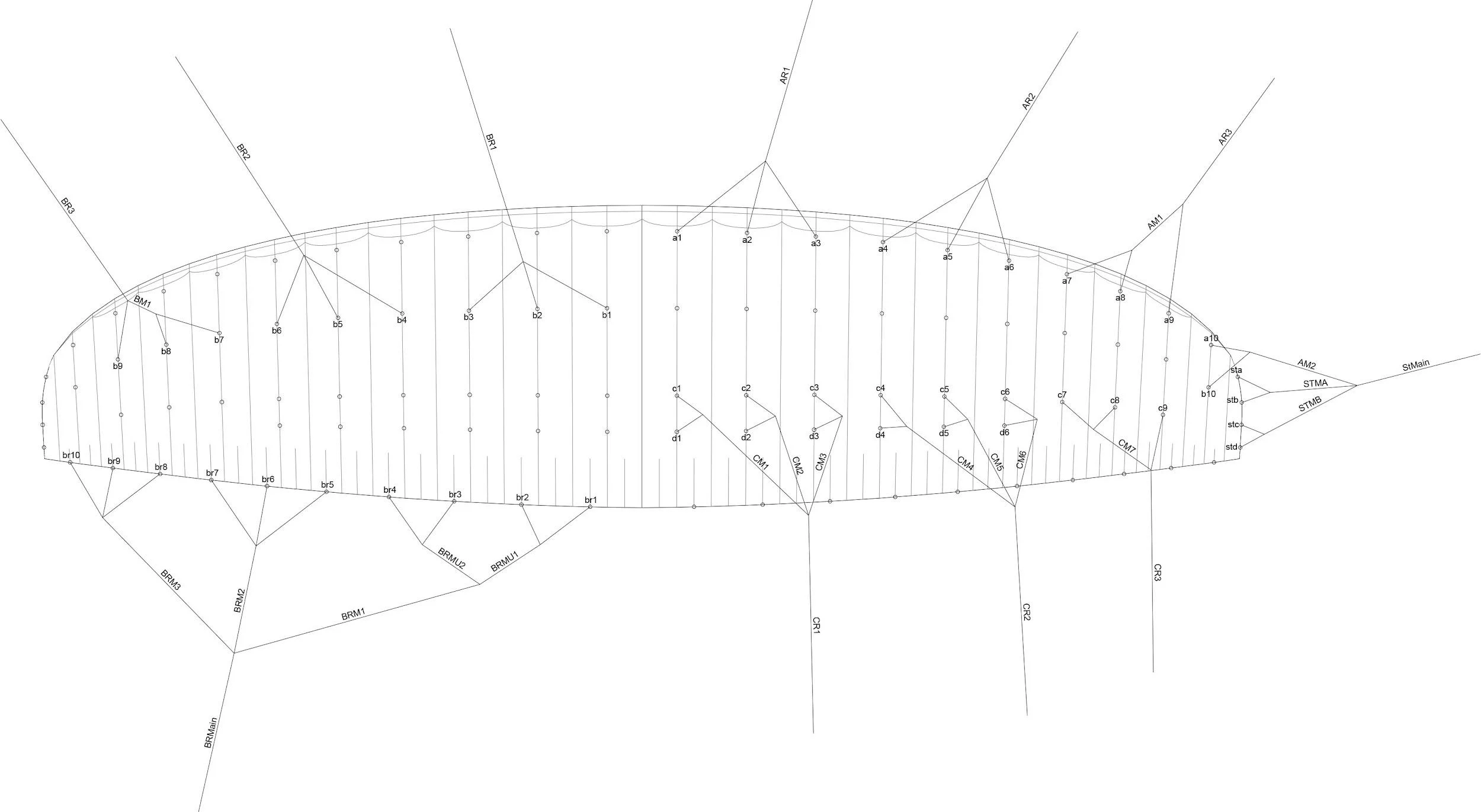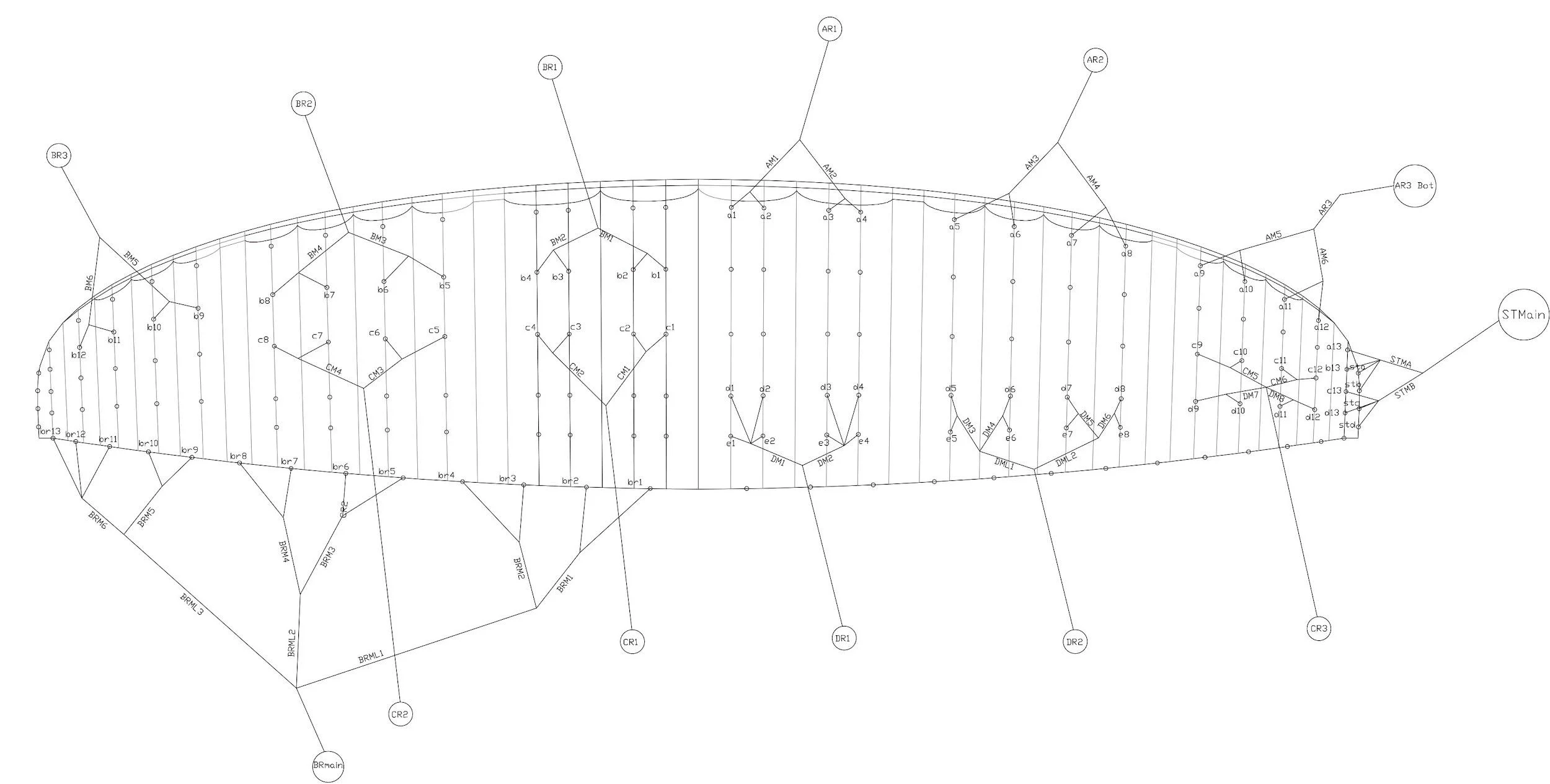
Extracts from the AEROTECH flight manuals, to be applied when servicing A1 and A42td gliders, and the manual data to download. Lengths in millimetres, under 5 kg. Tolerance: as recommended by the PMA.
Downloads – flight manual values
For each glider: overall line lengths with and without risers, risers, finished loop-to-loop length of every line (under 5 kg), line materials and lines layout.
| Glider | Manual values | Lines layout |
|---|---|---|
| A1 S (55-85 kg) | Excel PDF | Layout (PNG) |
| A1 M (70-110 kg) | Excel PDF | Layout (PNG) |
| A1 L (90-125 kg) | Excel PDF | Layout (PNG) |
| A42td (110-220 kg) | Excel PDF | Layout (PNG) |
| Complete flight manuals | A1 page A42 page | |
AEROTECH A1 – extract from the flight manual (V1.6), chapter 17 “Periodic Inspection”
To ensure the preservation of the performance and safety level of the A1, regular periodic inspections are essential. The first inspection must be carried out after 24 months of use or 150 flight hours, whichever comes first. Subsequent inspection intervals are specified in the table below.
This inspection interval may be adjusted depending on the conditions of use. Intensive use, frequent flights in demanding conditions, or improper storage may require more frequent inspections.
Any change in the behaviour of your wing, or any unusual event that may have affected it (impact, significant collapse, immersion, etc.), must lead to a geometric inspection carried out by a qualified professional, without waiting for the scheduled periodic inspection.
The periodic inspection makes it possible to assess the overall condition of the glider and its components, in particular the fabric, risers, trim and lines. It must be carried out in accordance with the recommendations of the PMA, as defined in the document “PMA Standard for Periodical Inspection of Paragliders”, as well as the document “PMA Standard – Material Changes in Paragliders (V 2025_12_1 – 2025-12-16)”.
During the first two periodic inspections, it is not necessary to test the breaking strength of the upper-level lines. As these lines are made of Dyneema, experience shows that destructive testing at this stage does not provide relevant information regarding the condition of the material. Therefore, only the breaking strength of the lower-level lines is tested during these first two inspections.
The lower-level lines must be subjected to a breaking strength test after two years or 150 flight hours, whichever comes first. Thereafter, a breaking strength test must be carried out at least every two years or every 150 flight hours.
The upper-level lines must be included in the breaking strength test from the third periodic inspection, i.e. approximately six years after first use or 450 flight hours. From this stage onwards, the breaking strength test must cover the entire line set, including both lower and upper levels, in order to monitor the overall ageing of the materials.
| Inspection intervals and lines to be tested | Line breaking strength test – lower level | Upper level |
|---|---|---|
| 2 years or 150 hours after first use | ✔ | |
| 4 years or 300 hours after first use | ✔ | |
| 6 years or 450 hours after first use | ✔ | ✔ |
| Every year or every additional 100 hours | ✔ | ✔ |
| Line rejection values (daN) | 7343-280 | PPSL 120 |
|---|---|---|
| S | 80 | 26 |
| M | 99 | 31 |
| L | 111 | 36 |
AEROTECH A42td – extract from the flight manual (V1.3), chapter 17 “Periodic Inspection”
To ensure that the A42td continues to deliver its designed performance and safety level, periodic inspections are essential. The first inspection must be carried out after 24 months of use or 150 flight hours, whichever comes first. Subsequent inspection intervals are specified in the table below. If your wing exhibits abnormal flight behaviour or has been involved in an incident, do not wait until the next scheduled inspection—have it checked by a qualified professional as soon as possible.
Any change in your wing's flight behaviour, or any unusual event that may have affected it (hard impact, major collapse, water immersion, etc.), requires a trim check to be carried out by a qualified paragliding professional without waiting for the next scheduled periodic inspection.
The periodic inspection is intended to assess the overall condition of the wing and its components, including the fabric, risers, trim, and lines. It must be carried out in accordance with the recommendations of the PMA (Paraglider Manufacturers Association), as defined in the document “PMA Standard for Periodical Inspection of Paragliders”, as well as “PMA Standard – Material Changes in Paragliders (V 2025_12_1 – 2025-12-16)”.
During the first two periodic inspections, it is not necessary to perform a breaking strength test on the intermediate and upper-level lines. As these lines are made of Dyneema, experience has shown that tensile testing during this period of service does not provide meaningful information regarding the condition of the material. Consequently, only the breaking strength of the lower-level lines is tested during the first two periodic inspections.
The lower-level lines must undergo a breaking strength test at every inspection.
The intermediate and upper-level lines must be included in the breaking strength test from the third periodic inspection onwards, corresponding to approximately six years after commissioning or 450 flight hours. From this inspection onward, the breaking strength test shall cover the entire line set, including the lower, intermediate, and upper levels, in order to monitor the overall ageing of the materials.
| Inspection intervals and lines to be tested | Line breaking strength test – lower level | Upper level |
|---|---|---|
| 2 years or 150 hours after first use | ✔ | |
| 4 years or 300 hours after first use | ✔ | |
| 6 years or 450 hours after first use | ✔ | ✔ |
| Every year or every additional 100 hours | ✔ | ✔ |
| Line rejection values (daN) | 7343-420 | PPSL 200 | PPSL 120 |
|---|---|---|---|
| 42 | 174 | 130 | 78 |
Note: This manual provides the manufacturer's replacement limits only for the main (centre) lines. If you require the replacement limits for the complete line set, please contact Aerotech.
Parts and materials
AEROTECH supplies workshops with every part of its gliders (lines, complete line sets, risers, assembled cells, panels) and the original raw materials.
AEROTECH workshop – 489 route de Grasse, 06140 Vence, France – +33 6 20 89 91 31 – info@fly-aerotech.com